FreeBSD 15.1-RELEASE Launches with Network and Kernel Upgrades
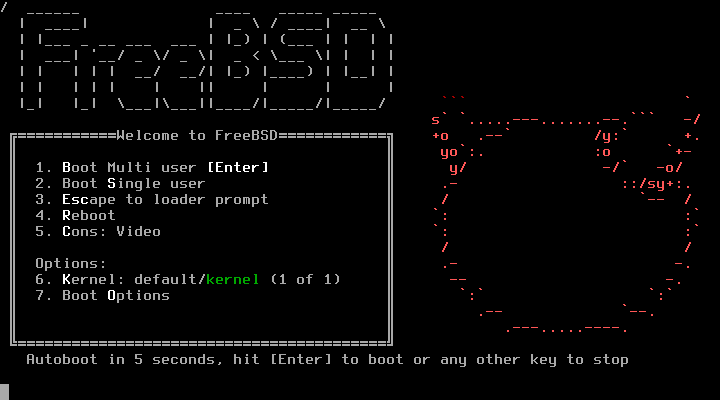
The FreeBSD Project has officially announced the release of FreeBSD 15.1-RELEASE. While the operating system’s external interface remains comfortably familiar, the underlying architecture has undergone substantial modernization. This pivotal release introduces profound enhancements to network drivers, cloud imaging, ZFS, NFS protocols, virtualization capabilities, contemporary C language support, and Unicode integration.
Release Overview and Architecture Support
The FreeBSD development team promulgated FreeBSD 15.1-RELEASE on June 16, 2026. This iteration constitutes the second minor release within the stable/15 branch, succeeding FreeBSD 15.0, which debuted in December 2025. System administrators can immediately procure the installation media from the official FreeBSD download directory. Installation images are comprehensively available for amd64, aarch64, armv7, powerpc64, powerpc64le, and riscv64 architectures.
FreeBSD 15 definitively continues the strategic migration away from legacy 32-bit platforms. Native support for i386, armv6, and 32-bit powerpc has already been excised. Consequently, armv7 persists as the sole surviving 32-bit architecture within the FreeBSD 15 ecosystem. However, backward compatibility for executing 32-bit binaries on 64-bit systems is meticulously maintained via the COMPAT_FREEBSD32 translation layer. Furthermore, the development steering committee previously abbreviated the lifecycle of major branches from five to four years, pivoting toward a more accelerated cadence for intermediate point releases.
Significant Technical Enhancements
Network and Wi-Fi Advancements
One of the most consequential paradigm shifts involves wireless networking capabilities. Drivers governing critical hardware, such as the rtw88 (for Realtek 802.11n/ac devices), rtw89 (for Realtek 802.11ax), and iwlwifi (for Intel adapters), are now intricately synchronized with the Linux 7.0 codebase via LinuxKPI. This sophisticated compatibility layer empowers FreeBSD to harness portions of the Linux driver infrastructure, thereby drastically accelerating support integration for contemporary Wi-Fi hardware. Industry analysts at Phoronix have explicitly commended this release for its extensive hardware and driver refinements.
Networking improvements extend far beyond wireless connectivity. The robust ipfw packet filter now accommodates masked table lookups, including support for non-contiguous IP address masks. Additionally, developers have authorized the routing of IPv6 packets into divert sockets, a functionality historically restricted exclusively to IPv4 traffic. Concurrently, the ifconfig utility received the new stableaddr flag, facilitating the generation of consistent IPv6 addresses in strict accordance with RFC 7217.
Kernel and System Administration Updates
The kernel architecture now features a dynamic mechanism for task scheduler selection during the boot sequence. Within the standard GENERIC configuration for amd64 architectures, both the modern SCHED_ULE and the legacy SCHED_4BSD schedulers are compiled natively. Administrators can seamlessly toggle between these options utilizing the kern.sched.name tunable. Because the scheduler dictates how processor time is allocated among competing tasks, this flexibility is invaluable for system administrators optimizing diverse workload profiles.
For administrative convenience, the default command shell for the root and freebsd users within the release images has transitioned from csh to sh. Furthermore, the system incorporates the novel setaudit utility for granular audit policy management. Notably, the historical blacklist subsystem has been rechristened as blocklist, accompanied by the blocklistd background daemon. While legacy parameters within rc scripts and filter rules remain functional, they will now generate deprecation warnings.
Storage and File System Refinements
Modifications within the storage subsystem prominently impact ZFS, tape drive operations, and NFS. The venerable mt utility now boasts seamless compatibility with modern LTO-10 and LTO-10P magnetic tape technologies. The zpool prefetch command has been augmented to support BRT metadata, thereby significantly accelerating block cloning and liberation processes.
Furthermore, the NFS client exhibits enhanced interoperability with file systems that disregard case sensitivity in nomenclature. Diskless booting environments utilizing NFSv4 have also received crucial updates, now fully supporting root partition mounting and precise user mapping via the nfsuserd daemon.
Virtualization and Cloud Integration
Virtualization technology has received critical attention in this release. The virtio-based GPU driver is now fully operational within the Parallels Desktop environment. The bhyve hypervisor has been upgraded to support UNIX domain sockets for the remote framebuffer. This strategic enhancement permits the secure forwarding of a graphical console directly into a Jail, completely bypassing the need for a network connection. Furthermore, LASS technology has been integrated to fortify the strict segregation between kernel address space and user-level processes.
FreeBSD cloud images, predicated on the packaged base system, now natively incorporate the pkg package manager. These images are engineered to automatically update foundational packages during their initial instantiation. Virtual machine images are readily accessible in universally recognized formats, including QCOW2, VHD, VMDK, and raw. Official deployments for FreeBSD 15.1 are also actively maintained for Amazon EC2, Google Compute Engine, Microsoft Azure, and Vagrant environments.
Future Roadmap and Deprecations
FreeBSD 15.1 meticulously continues the foundational groundwork required for comprehensive C23 standard compliance. The forthcoming C language standard introduces powerful features such as nullptr, BitInt(n), and char8_t. However, select modifications may inevitably conflict with legacy codebases. The developers anticipate achieving absolute C23 compliance in the forthcoming FreeBSD 16 branch.
The development team has also issued proactive warnings regarding future architectural purges. FreeBSD 16 is slated to permanently excise the antiquated fdisk and bsdlabel utilities, firmly recommending the superior gpart or bsdinstall as replacements. Moreover, classic printing utilities including lpr, lpd, and chkprintcap have been officially designated as obsolete. Administrators are strongly encouraged to migrate to modern solutions like CUPS or LPRng.
FreeBSD 15.1-RELEASE is scheduled to receive comprehensive support and security errata until March 31, 2027. Conversely, the preceding point release, FreeBSD 15.0, will reach its definitive end-of-life on September 30, 2026. Ultimately, the entire FreeBSD 15 architectural branch is projected to remain supported until December 31, 2029.
Support Our Threat Intelligence
If you find our technology report and cybersecurity news helpful, consider supporting our work.
 Buy Me a Coffee
PayPal
Buy Me a Coffee
PayPal


