Cavern Manticore Modular Framework Exposed
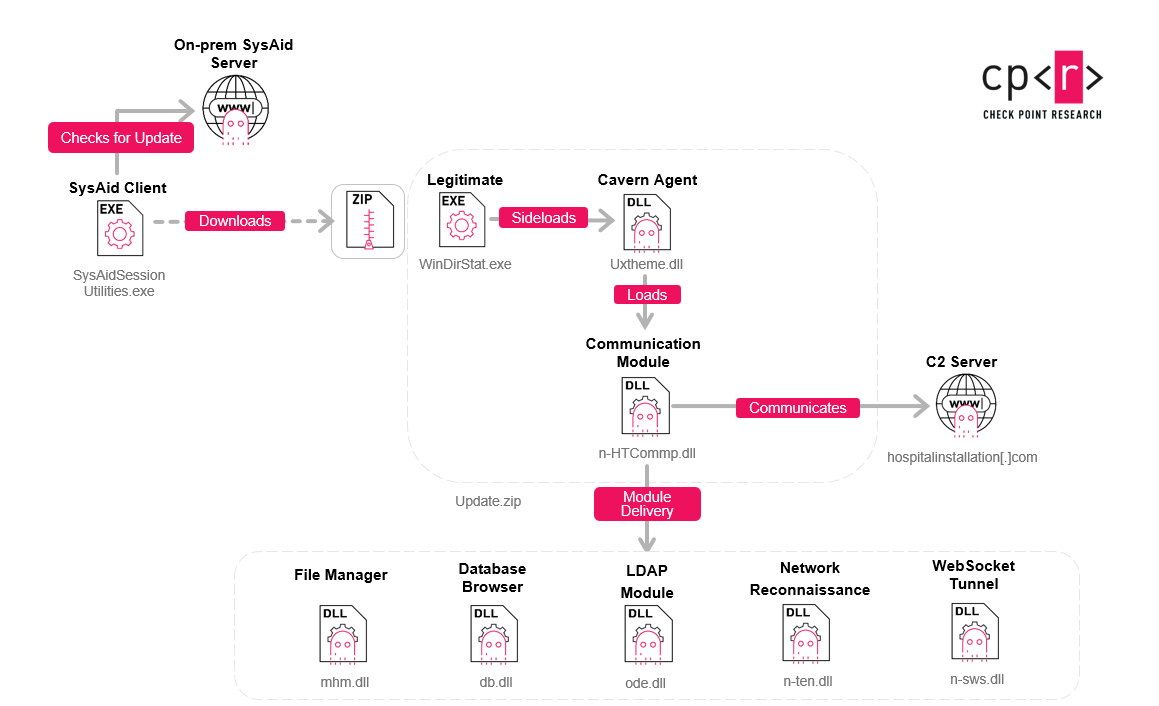
Iranian hackers have transformed ubiquitous system administration tools into clandestine pathways for infiltrating highly secure networks. The threat actor known as Cavern Manticore leverages a novel, modular framework dubbed “Cavern.” They orchestrate sophisticated cyberattacks against Israeli governmental institutions and prominent IT enterprises, as revealed by cybersecurity experts at Check Point. In select instances, these malicious operators systematically breached IT service providers first. They utilized this compromised infrastructure as a stepping stone to reach more critical, high-value targets.
The Rise of the Cavern Manticore Threat
The clandestine activities of Cavern Manticore have been closely monitored since early 2026. Intelligence analysts attribute this formidable syndicate to the Iranian Ministry of Intelligence and Security. Furthermore, its cryptographic arsenal shares distinct architectural hallmarks with tools previously deployed by MuddyWater and Lyceum. To achieve initial network compromise, the hackers masterfully abused pre-existing remote management software. Thus, their nefarious intrusions masqueraded flawlessly as routine administrative maintenance.
A Sophisticated Modular Architecture
Upon successfully breaching the perimeter, the adversaries deployed the Cavern framework. This sophisticated platform comprises a primary command agent and a versatile array of distinct modules. Operators dynamically load these components to suit the specific objectives of their illicit campaigns. Consequently, this modular paradigm empowers them to seamlessly reconnoiter internal networks. They can manipulate sensitive files, enumerate domain users, validate compromised credentials, and forge encrypted persistent tunnels.
Mastering Obfuscation and Evasion
The architects of Cavern devoted meticulous attention to advanced obfuscation techniques. They ensured the platform remains notoriously difficult to reverse-engineer. Although programmed in .NET, the components are meticulously compiled into three entirely disparate formats. Therefore, security researchers must employ distinct analytical tools to dissect each variant.
Furthermore, select modules deliberately conceal vital strings and system functions until the precise moment of execution. This profound complication renders automated file inspection nearly impossible. Unsurprisingly, the overwhelming majority of discovered specimens remained practically invisible to conventional antivirus detection systems.
In-Memory Execution and Tool Variety
The ingenious methodology governing module execution provides an additional, formidable layer of defense. Cavern meticulously injects each component into a thoroughly isolated memory enclave. It executes the designated task and subsequently purges the code from the system entirely. Upon task completion, this transient approach leaves exceedingly few forensic artifacts for cybersecurity specialists to analyze. Moreover, the platform can autonomously update its internal components. It securely eradicates previously loaded modules prior to initiating a new session.
Analysts have unearthed specific modules engineered for various destructive tasks. These include file management, database interrogation, Active Directory mapping, and covert proxy tunnel establishment. One particularly insidious component possesses the ability to decrypt heavily protected user data. Another systematically verifies credential pairs to illicitly access restricted network resources. Consequently, operators can meticulously curate a bespoke toolkit for every individual victim. This ensures the full breadth of the platform remains hidden even if defenders compromise a single infected workstation.
The Evolutionary Trajectory of Cavern
Comprehensive code analysis further demonstrates that Cavern evolved through a gradual, iterative development lifecycle. Earlier iterations, initially designated as Cav3rn, manifested as cumbersome, monolithic software architectures. Over time, the developers wisely decentralized its capabilities across separate modules. They integrated novel communication protocols for their command-and-control servers and rendered the components exponentially more difficult to analyze.
Check Point definitively links Cavern Manticore to the Iranian state. They base this attribution on a convergence of technical indicators, shared infrastructure, and striking operational parallels. The syndicate predominantly targets Israeli governmental institutions and the broader IT sector. In several documented cases, a compromised service provider merely served as an expendable intermediary.
This extensive campaign unequivocally demonstrates a chilling new reality. Trusted remote management tools are rapidly becoming the preferred conduit for stealthy, devastating cyberattacks. Cavern Manticore expertly exploits the legitimate access granted to IT service providers. They traverse between organizations seamlessly, perfectly camouflaging their malicious exploits as mundane administrative duties. Finally, Cavern’s sophisticated architecture further severely impedes the timely detection of ongoing attacks. The hackers can rapidly swap their toolsets on the fly. This agility preserves their core platform and secures uninterrupted access to the infected infrastructure.
Support Our Threat Intelligence
If you find our technology report and cybersecurity news helpful, consider supporting our work.
 Buy Me a Coffee
PayPal
Buy Me a Coffee
PayPal


