The Auto-Bricker: Flawed HP BIOS Updates Pushed via Windows Update Freeze Elite Laptops
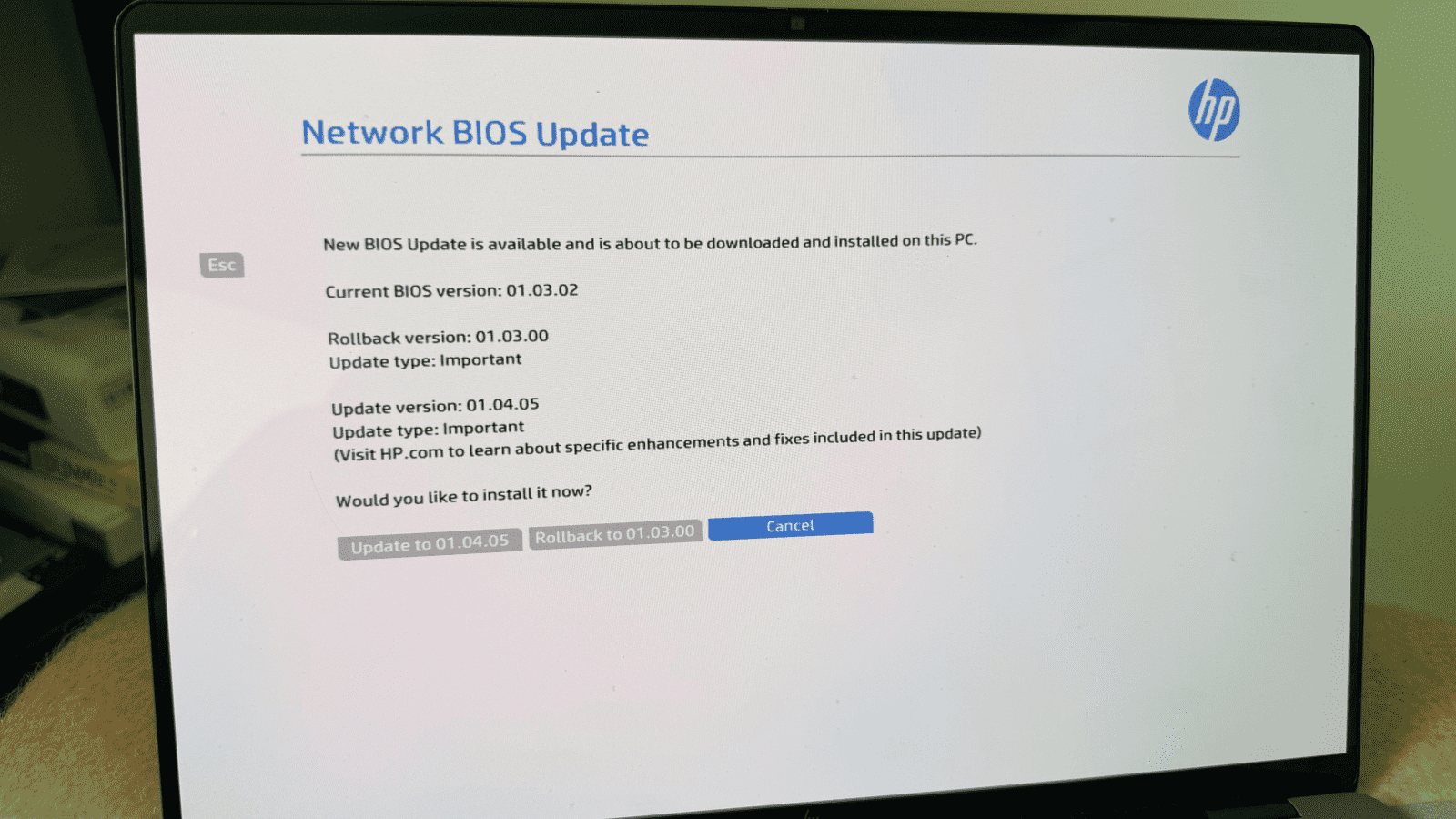
Over an extended operational horizon, a substantial contingent of enterprise practitioners utilizing HP’s premium notebook architecture has filed severe telemetry complaints regarding acute device regression post-installation of recent BIOS/UEFI firmware updates. The systemic anomalies documented by the consumer base span a destructive spectrum of operational failures, encompassing absolute boot loop initialization failures, unmitigated thermal dissipation loops characterized by un-throttled maximum-velocity cooling fan execution, and critical kernel panics resulting in the classic Windows 11 Black Screen of Death (BSOD), entirely disrupting organizational productivity.
By way of illustration, field reports indicate that the elite mobile workstation HP ZBook G1A suffered absolute structural paralysis during the pre-boot execution phase explicitly following a UEFI firmware flash sequence. Parallel diagnostic disclosures emerged across digital aggregator communities such as Reddit, where systemic tracking isolated the root cause of this infrastructure failure to an automated driver delivery channel. Specifically, HP routed these highly volatile BIOS configurations through Microsoft’s upstream Windows Update pipeline, indexing the payloads under a high-priority “Critical Update” taxonomy, which triggered silent, unhedged background installation routines across active Windows 10 and Windows 11 tenancies.
The structural tracking of these compromised firmware binaries exhibits slight variance across distinct device portfolios:
- HP ZBook G1A: The primary regression vectors have been localized to firmware build iterations 01.04.03 and 01.04.05.
- HP EliteBook X G1A: Complementary operational breakdowns have been tied to firmware release packages 01.03.11 and 01.05.00.
Crucially, executing an architectural restoration or firmware rollback post-flash is profoundly obstructed by native hardware security abstractions. A subset of system administrators reported navigating this barrier by invoking HP’s low-level Network BIOS Downgrade mechanism; however, this recovery vector enforces a strict hardware dependency, executing successfully only when anchored to an official, proprietary HP USB-C to Gigabit Ethernet adapter topology.
HP’s historical track record within the firmware deployment space is notoriously fraught with systemic risk. In 2024, an upstream BIOS release distributed by the enterprise permanently bricked a vast array of endpoints, stripping the hardware of its primary boot logic and coercing users to transport their assets to specialized HP Service Centers for physical component remediation. Lacking comprehensive extended warranty coverages, early enterprise adopters were forced to absorb the exorbitant financial overhead of out-of-warranty motherboard replacements, incurring substantial capital losses.
At the hour of this writing, HP’s engineering apparatus has acknowledged the influx of critical consumer logs and is actively mobilizing an internal investigation. Corporate communications state that impacted individuals should immediately establish communications with specialized HP Technical Support pipelines to obtain operational assistance; nevertheless, at this evolutionary stage of the incident response lifecycle, the vendor has declined to proffer an official, actionable remediation playbook, nor has executive leadership formally conceded a foundational design defect within the active firmware repository.
Support Our Threat Intelligence
If you find our technology report and cybersecurity news helpful, consider supporting our work.
 Buy Me a Coffee
PayPal
Buy Me a Coffee
PayPal
