Tag: GPU

  • Due to the rising popularity of ChatGPT, Nvidia computing cards may be in short supply

    With the fire of ChatGPT, Microsoft has further expanded its partnership with OpenAI. A few days ago, Microsoft has announced a new Bing search engine service based on ChatGPT, but the service is not yet open to everyone and needs to experience quota. Demand on the application side will drive the upstream industry. According to Wccftech, NVIDIA computing cards used in the AI ​​field may be in short supply.

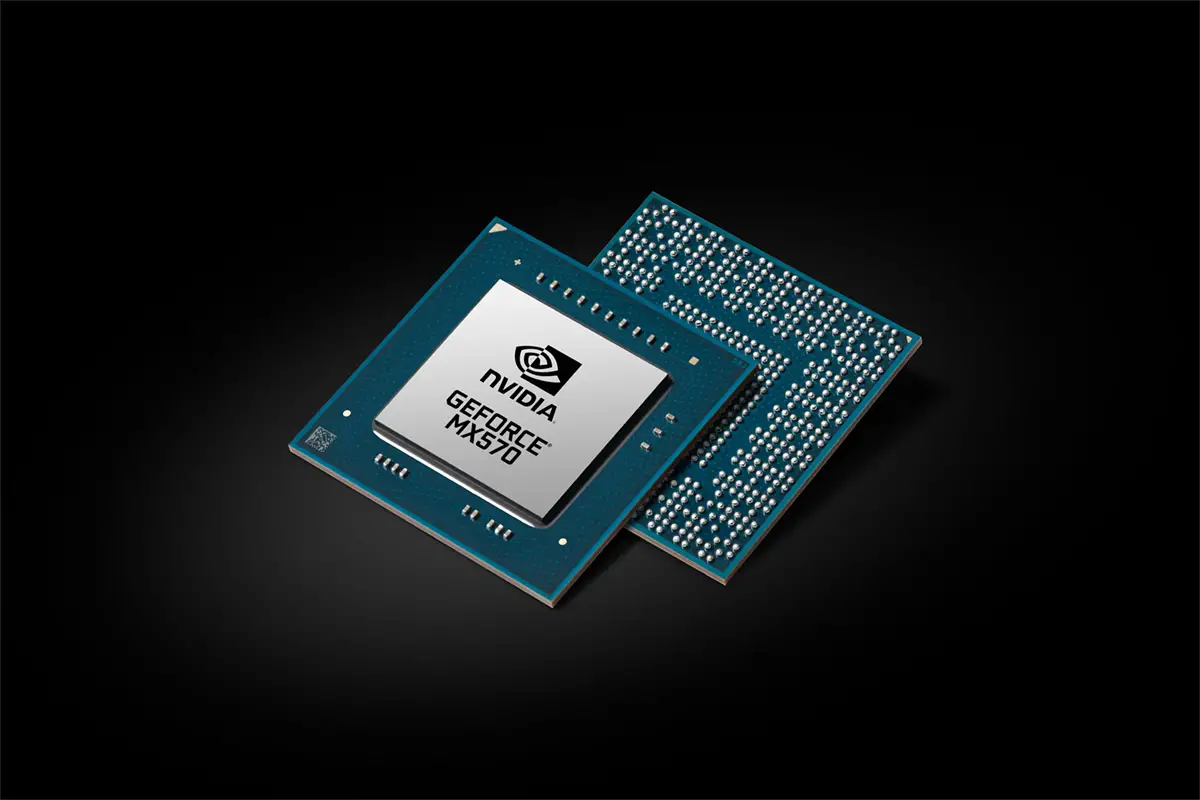
    Nvidia GeForce MX570 Geekbench

    Language, image, and video generation tools similar to ChatGPT rely heavily on AI computing power. According to FierceElectronics, the beta version of ChatGPT was trained on 10,000 Nvidia computing cards, but since gaining public attention, the system has been overwhelmed and unable to meet the demands of a large number of users. So OpenAI announced the ChatGPT Plus subscription plan, which is not only available during peak hours, but also provides faster response time and priority access to new features and improvements. Some analysts estimate that ChatGTP currently uses about 25,000 Nvidia computing cards for training, an increase of 15,000 compared to the previous beta version.

    As giants such as Microsoft and Google have integrated chatbots with search engines, Forbes predicts that if chatbots are used for every Google search, about 512,820 HGX A100 servers will be needed, a total of 4,102,568 A100 computing cards and about $100 billion will be needed in terms of servers and networks alone.
    The strong demand for computing cards in the market may be good news for Nvidia. Nvidia may announce its financial report for the fourth quarter of the fiscal year 2023 on February 22, 2023. Previously, Nvidia expected revenue in the fourth quarter of the fiscal year 2023 to be $6 billion, plus or minus 2%
  • Vietnamese dealers clear inventory: Buying a graphics card is like visiting a vegetable market

    As the cryptocurrency market collapsed in recent months, coupled with slowing global economic growth, graphics cards, which were already in high stock and oversupplied, took a sharp dive in prices. Recently, some Vietnamese netizens shared pictures of local streets on the Internet. Local dealers set up stalls directly at the door, and piles of GeForce graphics cards were placed on the ground, just like in a vegetable market. I believe that players who are familiar with graphics cards can probably know which brands and models they may be at a glance. In the picture, someone was riding a motorbike and brought up two. The seller just packed it in an ordinary red plastic bag and gave it to the buyer.

    (Image credit: Lê Thành on Facebook)

    Of course, such photos are not necessarily real, or they may be on a show, and there is no shortage of such examples in the Internet age. In any case, this sarcastic picture reflects how much graphics card prices have fallen over the past few months, like a vertical drop. After all, it is a fact that the price of graphics cards has collapsed. Players can search for a variety of graphics cards that have been used in the second-hand market.

    (Image credit: Lê Thành on Facebook)

    From the recent financial reports of manufacturers to the overall market environment, there is a pessimistic mood. In the next period of time, it is expected that the price and sales of graphics cards will continue to decline. This is in stark contrast to the various shortages in the supply chain two years ago when manufacturers reported record highs one after another.

  • GPU market may gradually return to growth

    Recently, IDC, Gartner, and Canalys have all released data related to the PC market, among which there are large differences in the statistics of the Mac product line. However, market data from the three statistical agencies all show a sharp decline in PC shipments in the third quarter of 2022. AMD’s preliminary financial results for the third quarter of 2022 have added to market concerns. As one of the best performers in the PC industry, its revenue in the third quarter of 2022 was significantly lower than expected by $1.1 billion.
    Gigabyte RTX 4090 Aorus Waterforce
    Jon Peddie Research (JPR), which has been tracking PC graphics market data, responded to these reports, with its president and founder Jon Peddie stating: “Our advice to clients has been consistent since 2020: The pandemic boom was not a surge in demand brought about by real growth in the market. The PC market is now correcting itself after a period of extraordinary growth spurred on by spending from an overwhelming surge of users working from home.”
    Peddie continued, “People were forced to work at home in 2020 and 2021, and many needed equipment. As a result, PC sales surged. Those people have what they need, and some of them are going back to the office. They don’t need new PCs, and won’t for three to five years. So, we are back to the nominal growth of the PC market, which was, and will be again after two quarters’ adjustment, tracking GNP growth.
    Jon Peddie Research said that after two-quarters of adjustment, the PC market will gradually resume growth, while discrete graphics cards are still strong, and the market is resilient and will continue to maintain a strong trend after short-term shocks. Shortages in the supply chain have eased in the past, but high inventories are a problem. TSMC’s capacity utilization is expected to trend downward in the next six months, and the impact of chip design companies cutting orders is starting to show.
  • Graphics card shipments may drop by 50%

    Intel, AMD, and Nvidia have all revised their target shipments and expected revenue for this year, with Intel and Nvidia both making larger cuts. With the collapse of cryptocurrencies, graphics card shipments may drop by 50%, and many related manufacturers are expected to be affected. Now it is necessary to prepare for a long winter.

    According to DigiTimes, Graphics card suppliers in Taiwan estimate that graphics card shipments will drop by 40% to 50% throughout 2022, which industry insiders say will cause Nvidia’s revenue to “fall at an unimaginable speed” and that annual revenue will inevitably decline hit hard. Nvidia issued an announcement two days ago, rarely pre-disclosing the results of the second quarter of fiscal 2023. The preliminary estimate was $6.7 billion, which was much lower than the expected $8.1 billion. The rest of the year will be devoted to clearing inventory.
    Intel expects full-year revenue to decline by $8 billion to $11 billion, and its full-year revenue forecast is also lowered to between $65 billion and $68 billion, with PC sales expected to drop 10 percent this year. To make matters worse, Intel’s ARC graphics card has fallen behind the original plan and has not yet been fully launched on the market. The continuously deteriorating market environment has put Intel’s ambitious GPU project in a dilemma.

    As the demand for the entire consumer market is shrinking, it also affects the demand for manufacturers of MCU chips, display ICs, panels, and other related manufacturers. Elan Microelectronics, which makes MCU chips for notebook computers and controllers for touch screens, expects revenue to drop 30 percent this quarter. Chromebook shipments have also taken a major hit, and are expected to drop by 50% to 60%. On the PC side, shipments of laptops and desktops fell 10% and 15%, respectively, this year, making it difficult for both gaming and commercial products to drive sales.

    Both AMD and Apple somehow sidestep the industry’s problems. AMD’s revenue in the second quarter of 2022 was $6.55 billion, an increase of 70% year-on-year and 11.3% quarter-on-quarter. Part of the growth in server and embedded processors has seized the market that originally belonged to Intel. Apple is advancing its self-developed chip plan. As the product line is fully equipped with M-series Intel x86 processors, it has not only increased its own supply but also caused Intel to lose a large number of orders. Sales of the entire Macbook product line are expected to continue to grow in 2022, with shipments reaching a record 28 million units.

  • AMD’s PC CPUs, and GPUs shipments will decline sharply next year

    It has been reported recently that, with the impact of inflation and the uncertain economic outlook and other factors, demand in the consumer electronics market is slowing rapidly, with Nvidia, AMD and Apple all planning to cut orders at TSMC. Corresponding to it are the survey reports of relevant institutions and investment companies, and it seems that the situation in the future is not optimistic.

    According to Seeking Alpha, according to a new report from investment firm Northland, AMD’s CPU and GPU shipments for client PCs will decline sharply next year, but the semi-custom business is still booming, and SoC shipments for PlayStation and Xbox platforms will continue to grow.

    Analysts estimate that AMD’s CPU revenue (including desktop and notebook platforms) will decline 6% year-on-year in 2023, and GPU revenue will decline 7% year-on-year, totaling about $675 million. At the same time, Xilinx’s revenue will also decline by 6% year on year. Contrary to these numbers, revenue from the console-related business will increase by 8% year on year, which also reflects the third year of the console’s life cycle, which will roughly triple in sales. In addition, AMD will still have a strong presence in the enterprise market, with revenue rising 55% year-over-year to around $3.1 billion in 2023, largely offsetting revenue declines in other segments.

    Although analysts at Northland moved AMD’s stock to “outperform,” they lowered their price target to $95, reflecting concerns about a global recession. After the close on July 1, 2022, AMD stock was trading at $73.670, its lowest level over the past year. AMD shares have fallen nearly 50% over the past six months, similar to rival Nvidia.

  • Cryptocurrency plummets, and graphics card prices also drop

    The cryptocurrency has fallen sharply recently. It has fallen more than 60% since May, and the price of ETH today came to around $1,100. Many miners choose to pull the plug, which is also related to the price of the graphics card. In recent months, the supply of graphics cards has gradually become sufficient, and many manufacturers have launched promotional plans to stimulate buying. However, with the news that the new GPUs will be launched in the second half of the year, many players still maintain a wait-and-see attitude.

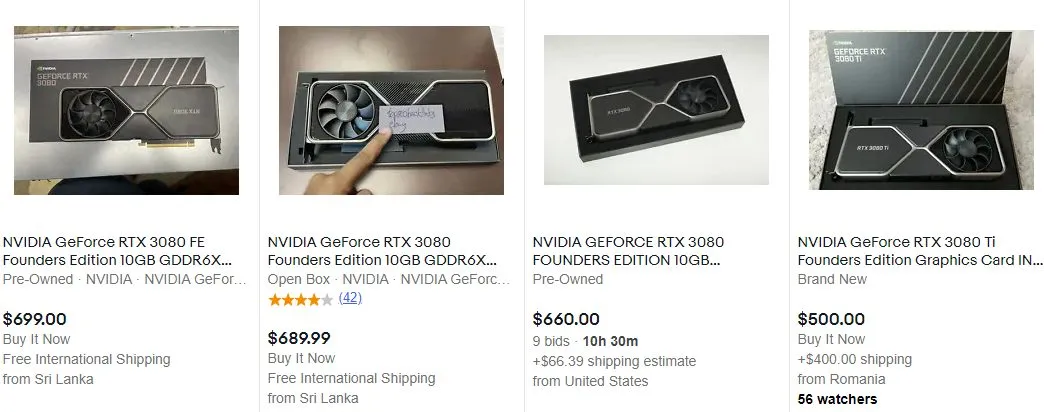
    NVIDIA RTX 3080 finally dropping under MSRP, Source: eBay

    Some graphics cards have been sold at lower MSRP (suggested retail price) on eBay. The RTX 3080 is already under $700, and there are even six cards that sell for $2,500. That means each card costs just $417.

    Some of the new GPUs are currently lower than the suggested selling price. For example, the suggested price of the RTX 3090 Ti is $2,000, and the price is currently around $1,800. RTX 3080 Ti suggested price is $1200, and the price is currently $1000. However, most of the special overclocked editions are still higher than the suggested price.

    Source: Tom’s Hardware

  • Discrete GPUs shipments in 2022Q1 increased by 32.2% year-on-year

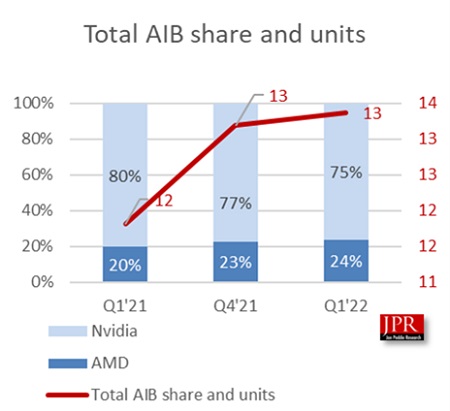
    Recently, market analysis firm Jon Peddie Research released a new research report showing that in 2022Q1, discrete graphics card shipments increased by 32.2% year-on-year and 1.4% month-on-month. AMD’s market share has grown substantially, an increase of four percentage points compared to the same period last year.

    In the first quarter of 2022, the graphics card manufacturer’s revenue was $8.6 billion, although revenue fell significantly by $4 billion from $12.4 billion in the fourth quarter of 2021 due to the decline in average selling price (ASP). Over the past four quarters, graphics card makers’ revenue reached $46,169.4 million, and Jon Peddie Research forecasts it will grow to $57 billion by 2025. This is due to Intel’s entry into the discrete graphics card market, and its brand strength and position in OEMs will increase shipments, and growth will start to show in 2023.

    Graphics card manufacturers shipped 13.4 million units this quarter, a year-on-year increase of 32.2%, and a 1.4% increase from 13.19 million units in the previous quarter. Among them, AMD’s total shipments of desktop platforms increased by 6% month-on-month and increased by 43.9% compared with last year. Nvidia’s quarterly shipments fell 0.3% year-over-year and grew 27.4% year-over-year. Nvidia still dominates with a 75% market share, with AMD increasing its market share to 24%. A year ago, Nvidia’s market share was 80% and AMD’s 20%.

    This year, due to the COVID-19 epidemic, supply chain problems, geopolitical reasons, and the resulting inflation, the business development of manufacturers has caused a lot of trouble, but the shipments and revenue of discrete graphics cards in the first quarter are still very objective. Usually, by the second quarter of each year, sales of discrete graphics cards will decline. Given the large headwinds this year, Jon Peddie Research expects shipments in the second quarter to decline by 20% or more.

  • GPU market data statistics show that GPU demand has weakened

    Recently, Jon Peddie Research (JPR) released the latest GPU market statistics report, showing that the GPU shipments (including integrated and discrete graphics cards) used in PCs in the first quarter of 2022 were 96 million, which was down 6.2% month-on-month and 19% year-on-year. In the long run, the PC and GPU market fundamentals are solid, and Jon Peddie Research expects GPUs to achieve a CAGR of 6.3% between 2022 and 2026.

    In the first quarter of 2022, the overall connection rate of GPUs and PCs (including integrated and discrete graphics, desktops, notebooks, and workstations) was 129%, an increase of 5% sequentially; desktop discrete graphics card shipments increased by 1.4% month-on-month; among the GPU shipments used in PCs in the first quarter of 2022, AMD shipments fell 1.5%, Intel shipments fell 8.7%, and Nvidia shipments increased 3.2%. Judging by the data, it appears that the decline in shipments mainly comes from OEM machines, especially laptops.

    In the first quarter of 2021, Intel’s GPU market share was as high as 68%, thanks to the heavy use of integrated graphics in desktops and laptops, while AMD and Nvidia’s GPU market share was 17% and 15%, respectively. By the first quarter of 2022, the GPU market has changed a lot, with Intel’s GPU market share falling to 60%, and AMD’s and Nvidia’s GPU market share increasing to 19% and 21%, respectively.

    Jon Peddie, president of Jon Peddie Research, said that while Nvidia, AMD, and Intel will all launch new products in the second half of this year, consumers are still cautious, and GPU shipments are expected to eventually grow by 2% to 3% this year.

  • NVIDIA CFO Expects GPU Inventory To Remain Stable During This Quarter

    Recently, Nvidia announced its financial results for the first quarter of the fiscal year 2023, showing that the hot sales of GPUs drove the growth of revenue, and the two-pillar businesses of gaming and data center achieved record results. While revenue beat analysts’ expectations, net profit fell short of expectations, and revenue in the fiscal second quarter is expected to fall by $500 million due to the coronavirus and geopolitical impacts.

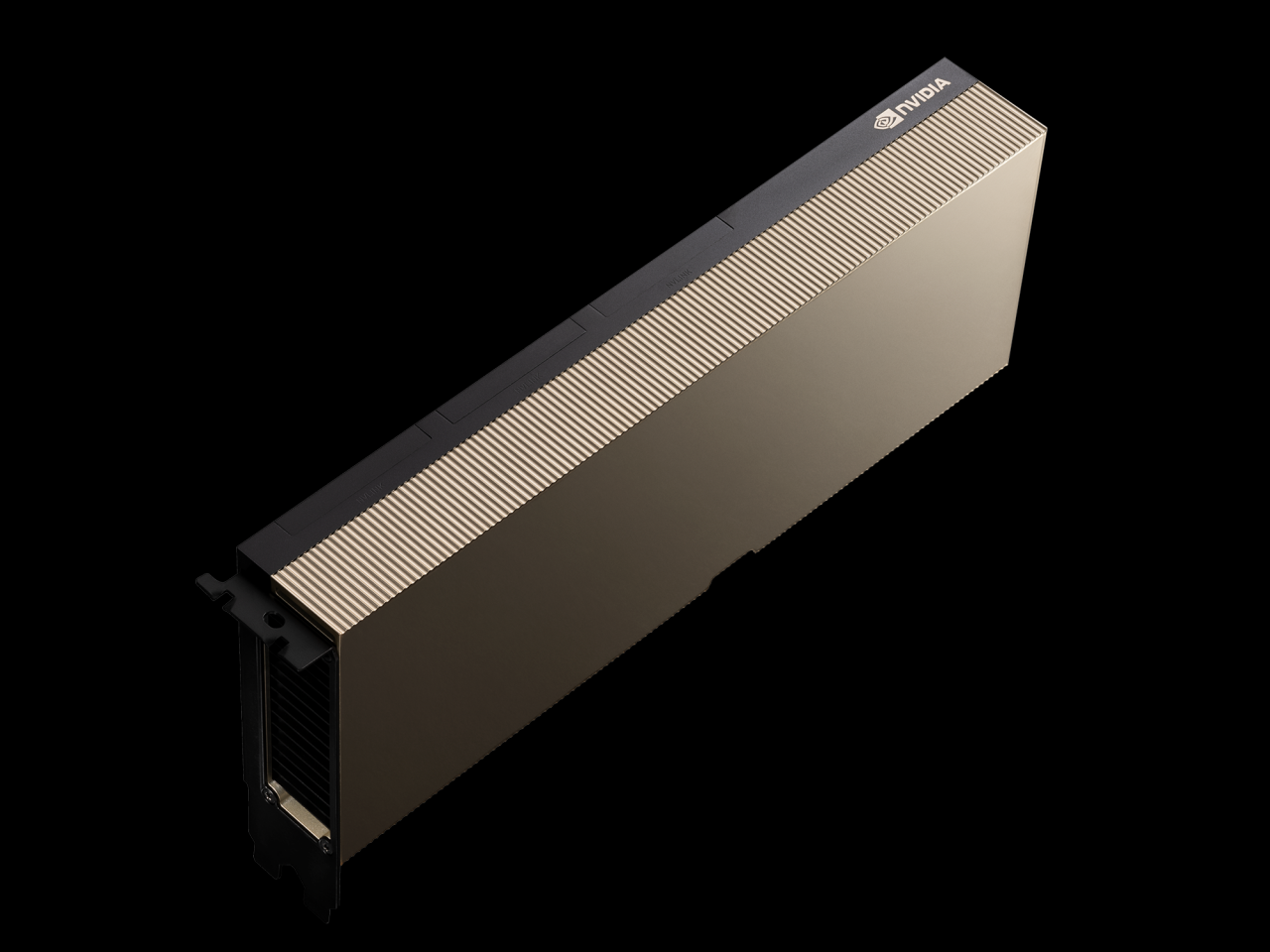
    NVIDIA Ampere A100

    According to Wccftech, Nvidia Chief Financial Officer (CFO) Colette Kress said that Nvidia GPU inventory costs have risen at present, and it needs to deal with complex supply chain issues and difficult semiconductor industry issues. Due to longer lead times in the supply chain and the impact of shortages, Nvidia has more than doubled its long-term purchases amid heightened uncertainty, which also increases the risk of excess inventory.

    In fact, after entering 2022, the supply of the graphics card market has stabilized, and the price has also dropped significantly. The supply of GeForce RTX 30 series graphics cards has gradually normalized. Nvidia, which has stockpiled too much in the early stage, has increased inventory pressure, and its partners have recently begun to cut prices and destock to reduce operating risks. However, due to the long-term shortage and premium in the past two years, coupled with the upcoming release of NVIDIA GeForce RTX 40 series graphics cards, some customers have declined in interest and chose to hold the currency for purchase, making the market oversupply possible.

    It is reported that Nvidia is considering delaying the launch of the new generation of GeForce RTX 40 series in order to help partners digest the inventory as much as possible.

  • AMD says Radeon RX 6000 series is more cost-effective

    AMD recently launched the Radeon RX 6950 XT/RX 6750 XT/RX 6650 XT for desktop platforms, plus the entry-level Radeon RX 6400, the entire RDNA 2 architecture product line is basically complete. Recent supply and pricing show that the Radeon RX 6000 series is gradually on the right track, but the market share of Nvidia’s GeForce RTX 30 series based on the Ampere architecture is dominant.

    For PC gamers, what’s the easiest and most straightforward reason to buy? Of course, it’s value for money. AMD clearly understands this, and its chief gaming architect, Frank Azor, recently showed a chart that simply and clearly explains why the Radeon RX 6000 series is more cost-effective than competing products.

    Each Radeon RX 6000 series GPU on the chart has a corresponding NVIDIA GPU (the RTX 3090 Ti is missing). The price, power consumption, and performance of each GPU are listed above, and two indicators are introduced: one is the price/performance ratio, namely perf/$, and the other is the energy consumption ratio, namely fps/watt. In addition, AMD divides the game target settings into four levels, namely 1080P medium picture quality, 1080P max picture quality, 1440P max picture quality, and 4K highest picture quality.

    From the results, the highest-end Radeon RX 6950XT compared with the GeForce RTX 3090, with 80% higher performance per dollar, 15W lower power consumption, and a 22% lead in the power consumption per frame. Due to the relatively large volatility of graphics card prices on the market, the results of this comparison data may vary from day to day. This chart is based on the quotation of an e-commerce platform on May 10.

    Similar marketing methods were not uncommon in the past. Find a reasonable entry angle to show that your products are more competitive and more worthy of players to buy. AMD and Nvidia will release a new generation of graphics cards in a few months, and there will definitely be a new round of marketing battles, or there will be new marketing methods.